
Chitrakoot Travel Guide : Have you ever imagined walking the same forest paths where Lord Rama spent years of his exile? Where Sita gathered flowers and Lakshmana stood guard? Where the very rocks and rivers witnessed one of history’s most beloved spiritual epics? Welcome to Chitrakoot—a hidden gem of Indian pilgrimage that combines profound spiritual significance with breathtaking natural beauty.
Chitrakoot isn’t just another religious destination. This is where the Ramayana comes alive, where every hill, every ghat, every temple has a story directly connected to Lord Rama’s life. Straddling the border between Uttar Pradesh and Madhya Pradesh, blessed by the Mandakini River, and surrounded by forested hills, Chitrakoot offers something increasingly rare in our modern world—genuine peace combined with deep spiritual energy.
Unlike the crowded major pilgrimage sites, Chitrakoot retains an intimate, almost timeless quality. The pace is slower here, the atmosphere more contemplative, and the connection to ancient scriptures more tangible. Whether you’re a devoted Rama bhakt seeking darshan at sacred sites, a spiritual seeker looking for peaceful retreat, or a traveler exploring India’s epic heritage, this comprehensive guide will help you discover why saints and sages have called Chitrakoot home for millennia.

Why Chitrakoot Holds a Special Place in Hindu Pilgrimage
Among the countless pilgrimage sites scattered across India, Chitrakoot occupies a unique position. This is where Lord Rama, after being exiled from Ayodhya, chose to spend a significant portion of his fourteen years away from the kingdom. The name Chitrakoot itself means “Hill of Many Wonders,” and the town lives up to this description with its collection of sacred sites, each marking a specific episode from the Ramayana.
What makes Chitrakoot particularly special is its authenticity. While some pilgrimage sites have become heavily commercialized, Chitrakoot retains its original character—a place where spirituality isn’t performed for tourists but genuinely lived by residents. The sadhus meditating in caves, the pilgrims performing parikrama regardless of weather, the daily rituals conducted with generations-old precision—all create an atmosphere where the boundary between past and present seems to dissolve.
The landscape itself contributes to this sacred atmosphere. The Vindhya hills surround the town, the Mandakini River flows through it, dense forests once sheltered Rama and Sita, and natural caves provided refuge to ancient rishis. This combination of natural beauty and spiritual history makes Chitrakoot a destination that nourishes both soul and senses.
The Ramayana Connection: Understanding Chitrakoot’s Spiritual Significance
Lord Rama’s Fourteen Years of Exile
To truly appreciate Chitrakoot, you need to understand the Ramayana context. When Rama was denied his rightful claim to Ayodhya’s throne due to his stepmother Kaikeyi’s demands, he accepted fourteen years of exile with grace and obedience. Accompanied by his devoted wife Sita and loyal brother Lakshmana, Rama first went to various ashrams before settling in Chitrakoot.
The choice of Chitrakoot wasn’t random. The sage Bharadwaja recommended it as an ideal place for tapasya (spiritual practice) and peaceful living. Here, Rama built a simple dwelling, Sita maintained their modest home, and Lakshmana stood constant guard. They lived simply, interacting with sages, following dharma, and demonstrating how to maintain dignity and virtue even in adversity.
It was also here that one of the most emotional episodes of the Ramayana unfolded—Bharata, Rama’s brother who was given the kingdom, came to Chitrakoot to beg Rama to return and rule. Rama refused, upholding his promise to his father, and Bharata returned to Ayodhya carrying Rama’s sandals, which he placed on the throne, ruling only as Rama’s representative. This extraordinary display of brotherly love and adherence to dharma is commemorated at the Bharat Milap Temple.
The Sacred Sites Where the Epic Unfolded
Every significant location in Chitrakoot connects to specific Ramayana events. Ramghat is where Rama bathed in the Mandakini River. Sphatik Shila is the rock where Sita and Rama would sit together watching the river. Kamadgiri hill is believed to be the original location of Rama’s dwelling. Hanuman Dhara marks where Hanuman came seeking Rama’s blessings.
These aren’t just historical or mythological sites—for millions of Hindus, these are living spiritual centers where the divine presence can still be felt. Walking through Chitrakoot becomes a form of meditation, a way of connecting with the ideals that Rama represents—duty, righteousness, devotion, and grace under pressure.
How to Reach Chitrakoot
By Train: The Most Convenient Access Point
Chitrakoot has two railway stations—Chitrakoot Dham Karwi (in Uttar Pradesh) is the main station with better connectivity, located about 8 kilometers from the main temple area. Chitrakoot Railway Station (in Madhya Pradesh) is closer to the temples but has fewer train connections. Most travelers use Chitrakoot Dham Karwi as their arrival point.
Trains connect Chitrakoot to major cities including Delhi, Jhansi, Allahabad (Prayagraj), and Varanasi. The journey from Varanasi takes approximately 5-6 hours, from Prayagraj about 3-4 hours, and from Delhi around 8-10 hours. Booking in advance is advisable, especially during festival seasons when trains fill quickly.
From either station, local taxis, auto-rickshaws, and shared tempos are available to reach the main temple areas around Ramghat and Kamadgiri. The short journey from the station to the temples provides your first glimpses of Chitrakoot’s landscape—forested hills, small villages, and the peaceful rural character that defines the region.
By Road: Connecting from Major Cities
Chitrakoot is well-connected by road, though journey times can be longer than trains due to road conditions. From Prayagraj (Allahabad), it’s about 135 kilometers—roughly a 3-hour drive. From Varanasi, you’re looking at 265 kilometers taking 5-6 hours. From Lucknow, it’s approximately 280 kilometers or 6-7 hours.
State transport buses operate regularly from major cities, offering budget-friendly travel options. Private taxis and car rentals provide more comfort and flexibility, allowing stops at interesting points en route. The roads pass through typical Indian countryside—agricultural fields, small towns, roadside temples, and occasional glimpses of the Vindhya ranges.
From Varanasi, Prayagraj, and Ayodhya
Given Chitrakoot’s position between these major pilgrimage sites, many travelers include it in a broader North India spiritual circuit. From Varanasi, you can take a train or drive via National Highway 19. From Prayagraj, both train and road options are quick and convenient. From Ayodhya, the journey is longer (about 300 kilometers) but manageable in 6-7 hours by road.
This connectivity makes Chitrakoot perfect for multi-destination pilgrimages. Companies like TripCosmos.co specialize in creating comprehensive itineraries connecting Varanasi, Prayagraj, Ayodhya, and Chitrakoot with comfortable transport, eliminating the stress of planning multiple connections and allowing you to focus on the spiritual experience rather than logistics.
Top Sacred Sites in Chitrakoot
Ramghat: The Soul of Chitrakoot
If Chitrakoot has a spiritual center, it’s Ramghat. This beautiful ghat on the Mandakini River is where Lord Rama is believed to have bathed daily during his stay. The ghat comes alive at dawn as pilgrims perform morning ablutions and pujas, and again at dusk during the evening aarti when hundreds of oil lamps are floated on the river, creating a scene of ethereal beauty.
The ghat complex includes several temples dedicated to Rama, Sita, and other deities. The atmosphere is devotional but not overwhelming—you can sit on the steps, watch the river flow, observe pilgrims in prayer, and feel yourself naturally slipping into a contemplative state. The surrounding ghats also have historical and religious significance, each with its own associated legend.
During festivals, especially Ram Navami (Rama’s birthday), Ramghat transforms into a massive celebration ground with special pujas, cultural programs, and thousands of devotees gathering to honor Lord Rama. Even on regular days, the evening aarti is not to be missed—the synchronized chanting, the lamps on water, the ringing of temple bells, all combine to create an experience that touches something deep within.
Kamadgiri: The Sacred Hill Parikrama
Kamadgiri, the “hill that fulfills desires,” is a densely forested hill believed to be the original site where Rama built his dwelling. The entire hill is considered sacred, and the parikrama (circumambulation) of Kamadgiri is one of Chitrakoot’s most important spiritual practices.
The parikrama path is approximately 5 kilometers long, well-maintained with paved walkways, and lined with temples, shrines, and resting places. Completing the circuit typically takes 1.5 to 2 hours at a comfortable pace, though many devotees take longer, stopping at each shrine to pray. The path passes through serene forest areas where monkeys play in trees and peacocks occasionally cross your path—reminders that this is still the forest that sheltered Rama millennia ago.
Starting early morning is ideal—the air is cool, fewer crowds allow for peaceful walking, and the forest awakens around you with bird songs and rustling leaves. Many devotees perform the parikrama barefoot as a sign of devotion. The sense of accomplishment and peace after completing the circuit is profound, and many visitors report it as their most meaningful Chitrakoot experience.
Bharat Milap Temple: Where Brothers Reunited
One of Ramayana’s most emotional moments happened here—when Bharata came to Chitrakoot to convince Rama to return to Ayodhya and accept the throne. The meeting between the brothers, the display of mutual love and respect, and Rama’s firm but gentle refusal exemplify the ideals of dharma and duty that make the Ramayana timeless.
The Bharat Milap Temple marks this exact spot. While not as visually spectacular as some other temples, its historical and emotional significance makes it deeply moving for those familiar with the Ramayana. The temple houses beautiful idols depicting the scene, and the priests can narrate the full story with details that bring the ancient epic to life.
The area around the temple is peaceful, perfect for quiet contemplation. Many visitors report feeling the emotional weight of the moment—brothers torn between love and duty, each refusing to compromise dharma despite personal desires. It’s a powerful reminder that Chitrakoot isn’t just about scenic beauty or ritual—it’s about the timeless values that the Ramayana teaches.
Hanuman Dhara: The Cascading Temple
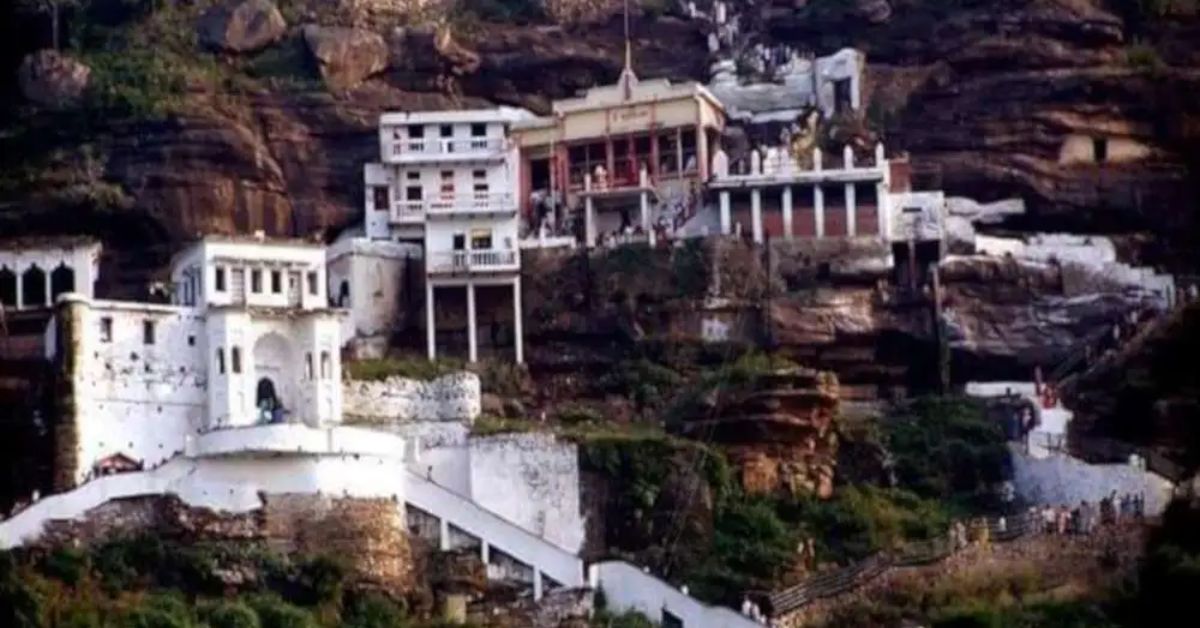
Perched on a hillside approximately 600 feet above the main town, Hanuman Dhara is both a physical challenge and a spiritual reward. According to legend, after burning Lanka with his tail, Hanuman felt his body was too hot and came to Chitrakoot seeking Rama’s help. Rama made water flow from the mountain to cool Hanuman, creating the sacred spring that still flows today.
Reaching Hanuman Dhara requires climbing about 360 stairs—not extremely difficult but requiring reasonable fitness. The climb is part of the pilgrimage, with each step bringing you higher above the valley, providing increasingly spectacular views of Chitrakoot’s landscape. Small shrines line the path, and the surrounding forest creates a peaceful atmosphere.
At the top, a natural spring flows continuously over the Hanuman idol, and devotees stand under this holy water for purification and blessings. The temple complex includes smaller shrines, and the panoramic view of the entire Chitrakoot valley—the Mandakini River meandering through green hills, the town spread below, Kamadgiri visible in the distance—makes the climb absolutely worthwhile. Visit during early morning or late afternoon to avoid midday heat.
Sati Anusuya Ashram: Beyond the Main Town
About 16 kilometers from the main temple area, tucked into the forest, lies Sati Anusuya Ashram. This is where the sage Atri and his devoted wife Anusuya practiced intense tapasya. Anusuya is celebrated in Hindu tradition as one of the Panchakanya (five virgins) whose devotion and purity are exemplary. Sita is said to have visited her here, seeking wisdom on being a devoted wife.
The ashram complex is serene and beautiful, surrounded by dense forest and blessed by a natural stream where the Mandakini River originates. The atmosphere here is different from the main town—more remote, more peaceful, more suited to meditation and introspection. The temples are simple but the natural setting is spectacular, especially during monsoon when the stream flows full and the forest is lush green.
The journey to Sati Anusuya Ashram is scenic, passing through villages and forest areas. Many visitors combine this with a trip to nearby Gupt Godavari, a sacred cave system. If you have a second day in Chitrakoot, dedicating it to these outer sites provides a different experience from the main temple circuit.
Sphatik Shila: Where Sita and Rama Rested
On the banks of the Mandakini River, downstream from Ramghat, lies Sphatik Shila—two large rocks believed to be where Sita and Rama would sit together in the evenings, watching the river flow. The rocks are natural crystal formations, and footprints visible on them are believed to be Sita and Rama’s.
The site is peaceful and romantic in a spiritual sense—a reminder that even in exile, even in the forest, Rama and Sita maintained their loving partnership. The simple temple nearby houses idols of the divine couple, and the setting by the flowing river is perfect for quiet contemplation.
Visiting Sphatik Shila is best combined with Ramghat as they’re close to each other. The walk along the riverside, the sound of flowing water, the shade of ancient trees, and the knowledge that you’re standing where divine feet once stood creates a powerful emotional experience for devotees.
Experiencing the Spiritual Atmosphere
Daily Rituals and Aarti Ceremonies
Chitrakoot’s spiritual life follows ancient rhythms unchanged for generations. The day begins before dawn with mangala aarti at various temples, when deities are awakened with devotional songs and prayers. Pilgrims take their morning bath in the Mandakini, performing rituals passed down through families for centuries.
Throughout the day, smaller pujas and ceremonies occur at various temples. But the evening aarti at Ramghat is the spiritual highlight—as dusk falls, lamps are lit, bells ring in synchronized rhythm, priests chant Vedic mantras, and devotees float diyas (oil lamps) on the river. The sight of hundreds of small flames drifting on dark waters, accompanied by devotional singing, creates an atmosphere of transcendence.
Participating in these rituals doesn’t require being Hindu or even religious—the aartis welcome everyone, and simply witnessing the collective devotion of so many people united in prayer can be profoundly moving regardless of your beliefs. The aartis typically last 30-45 minutes, but many visitors stay longer, sitting on the ghat steps, absorbed in the peaceful aftermath.
The Parikrama Experience
Performing parikrama (circumambulation) is central to the Chitrakoot experience. While Kamadgiri parikrama is the main one, devotees also perform parikrama of the entire Chitrakoot region—a much longer route taking several hours or even a full day, passing all major temples and sacred sites.
The parikrama isn’t just physical exercise—it’s a moving meditation. As you walk, you’re encouraged to maintain awareness, perhaps chanting a mantra or simply observing your breath. The path takes you through varied landscapes—forest paths, riverside walks, village roads, temple complexes—each offering different sensory experiences and contemplative opportunities.
Many devotees perform parikrama regularly as part of their spiritual practice. For visitors, even a single circumambulation of Kamadgiri provides insight into this ancient practice and creates a sense of completion and peace that’s hard to describe but deeply felt.
Best Time to Visit Chitrakoot
The ideal period to visit Chitrakoot is October through March when temperatures are comfortable for walking, climbing stairs to hilltop temples, and performing parikrama. Daytime temperatures range from pleasant to cool (15°C to 28°C), perfect for exploring outdoor sacred sites. Early mornings can be chilly (down to 10°C in winter), requiring light jackets.
Summer months (April to June) bring intense heat, with temperatures often exceeding 40°C. Morning and evening visits are manageable, but midday exploration becomes uncomfortable and potentially dangerous. If you must visit during summer, start very early, take long midday breaks, stay hydrated, and resume activities in late afternoon.
Monsoon season (July to September) transforms Chitrakoot’s landscape—the forests turn lush green, waterfalls flow vigorously, and the Mandakini River swells beautifully. However, heavy rains can disrupt travel plans, make stairs slippery, and occasionally cause flooding. If you love monsoons and don’t mind getting wet, this season offers unique beauty, fewer crowds, and lower accommodation prices.
Festival Seasons and Special Celebrations
Chitrakoot comes alive during Ram Navami (typically in March or April), celebrating Lord Rama’s birthday. The entire town becomes one massive celebration with special pujas, processions, cultural programs, Ramayana recitations, and thousands of devotees gathering from across India. Accommodation becomes scarce and prices increase, but the festive atmosphere is extraordinary.
Diwali has special significance here as it celebrates Rama’s return to Ayodhya after exile. The town is beautifully lit, special prayers are conducted, and the connection to Ramayana makes the celebration particularly meaningful. Kartik Purnima (the full moon in October-November) sees devotees arriving for holy baths and special rituals.
If you’re planning to visit during festivals, book accommodation well in advance and consider hiring a guide through operators like TripCosmos.co who can navigate crowds, arrange special darshans, and ensure you experience the festivities comfortably rather than spending your time fighting crowds and searching for basic services.
Where to Stay in Chitrakoot
Accommodation Options for Pilgrims and Travelers
Chitrakoot’s accommodation reflects its character as a pilgrimage town rather than a tourist resort. Expectations should be adjusted accordingly—you won’t find luxury five-star hotels, but you’ll find clean, comfortable, and affordable options perfectly suited to spiritual travelers.
Dharamshalas (pilgrim rest houses) are the most budget-friendly option, some offering free or nominal-cost accommodation for genuine pilgrims. Facilities are basic—simple rooms with beds, shared bathrooms, and minimal amenities—but they’re clean and provide authentic pilgrimage experience. Major dharamshalas include those run by various religious trusts around Ramghat and Kamadgiri.
Budget hotels (₹500-1500 per night) are plentiful around the main temple areas. These provide private rooms with attached bathrooms, fans (air conditioning in some), and basic furniture. Don’t expect fancy amenities, but most are maintained well enough for comfortable short stays. Hotel Rama International, Hotel Shri Krishna, and Hotel Ganga Awas are established options.
Mid-range hotels (₹1500-3500) offer better comfort—air-conditioned rooms, TVs, room service, and sometimes restaurant facilities. Hotel Aranya, MP Tourism’s Panchvati Retreat, and Ram Vilas Premium are popular choices offering good value. Some have rooms with views of Ramghat or Kamadgiri.
The MP Tourism property Panchvati Retreat deserves special mention—it’s arguably the most comfortable option in Chitrakoot, with well-maintained cottages, beautiful gardens, restaurant serving decent food, and a peaceful location slightly away from the main temple hustle.
Booking through experienced tour operators like TripCosmos.co ensures you get accommodation matching your comfort requirements, in convenient locations, with backup options if issues arise—valuable support in a town where hospitality infrastructure is functional but not sophisticated.
Local Cuisine and Dining in Chitrakoot
Chitrakoot is a pilgrimage town, so food is strictly vegetarian and largely sattvic (pure, simple food considered spiritually beneficial). This isn’t a destination for gourmet dining, but the simple, home-style North Indian food available is wholesome, fresh, and often quite delicious in its simplicity.
Small restaurants (dhabas) around Ramghat and Kamadgiri serve standard thalis—roti, rice, dal, seasonal vegetables, and yogurt—that are filling, affordable (₹80-150), and perfectly adequate for daily meals. The food is typically fresh and cooked throughout the day. Some places serve South Indian items like dosas and idlis for breakfast.
Street food options are limited compared to major cities, but you’ll find samosas, kachoris, jalebis, and various sweets at shops around the main areas. The local specialty is bafla—a wheat ball that’s boiled then roasted and served with dal and ghee, similar to Rajasthan’s dal bafla but with local variations.
Better hotels and the MP Tourism property have in-house restaurants serving slightly more varied menus, including Chinese and Continental dishes alongside Indian food, though quality is hit-or-miss for non-Indian items. Stick to simple North Indian preparations for the most satisfying meals.
Drinking water should be bottled or properly filtered—don’t drink directly from taps. Most restaurants serve filtered water, but carrying your own bottles is safer. During summer, fresh lassi (yogurt drink) and seasonal fruit juices provide refreshing hydration.
The dining experience in Chitrakoot is simple but this simplicity fits the spiritual atmosphere. You’re not here for the food—you’re here for the soul nourishment, and the modest meals support rather than distract from that primary purpose.
Suggested Itineraries for Different Trip Durations
One-Day Spiritual Circuit
If you only have one day, start very early. Arrive at Ramghat by 6:00 AM for morning ablutions and prayers. Perform Kamadgiri parikrama (5 km, about 2 hours) immediately after, finishing by 8:30-9:00 AM. Quick breakfast at a local restaurant, then visit Bharat Milap Temple and Sphatik Shila (both near Ramghat). Early afternoon, climb to Hanuman Dhara—allow 1.5-2 hours including the climb and time at the temple. Return to Ramghat area, rest briefly, then attend the evening aarti at sunset. This packed schedule covers the essential sites but allows minimal time for contemplation.
Two-Day Complete Exploration
Two days allow a much more satisfying experience. Day one: Morning at Ramghat, Kamadgiri parikrama at your own pace, visit Bharat Milap Temple and Sphatik Shila, climb Hanuman Dhara in late afternoon, evening aarti at Ramghat. Day two: Early morning departure to Sati Anusuya Ashram (16 km away), spend time in the peaceful ashram complex, visit nearby Gupt Godavari caves if interested, return to main town by afternoon. Spend your final evening revisiting favorite spots, perhaps sitting quietly by the Mandakini, absorbing the atmosphere one last time before departure.
Three-Day Immersive Retreat
Three days transform your visit from pilgrimage to retreat. Follow the two-day itinerary above but at a more contemplative pace, spending longer at each site. Dedicate extra time to simply sitting at Ramghat watching the river, meditating in quiet corners of temple complexes, or repeating the Kamadgiri parikrama on multiple days (many devotees do this). Attend morning aartis as well as evening ones. Consider attending satsangs (spiritual discourses) at various ashrams if available. The third day allows for spontaneous exploration—discovering smaller temples, talking with sadhus, walking through the old town, or simply resting and processing your experiences.
Combining Chitrakoot with Nearby Pilgrimage Sites
Chitrakoot’s location makes it perfect for inclusion in broader North India pilgrimage circuits. The classic Ramayana Circuit connects Ayodhya (Rama’s birthplace), Chitrakoot (where he spent exile), Prayagraj (Bharat Dwara where Bharata ruled as Rama’s representative), and sometimes extends to Rameswaram in South India (where Rama worshipped Shiva before attacking Lanka).
From Varanasi, you can create a comprehensive spiritual journey: Varanasi’s Kashi Vishwanath Temple and Ganga Aarti, Prayagraj’s Triveni Sangam where three rivers meet, Ayodhya’s newly built Ram Mandir, and Chitrakoot’s exile sites—covering Shiva worship, sacred river confluence, Rama’s birth and exile in one powerful circuit.
Adding Bodhgaya for Buddhist pilgrimage creates an inter-faith journey spanning Hinduism and Buddhism. The distances are manageable (Chitrakoot to Prayagraj 135 km, to Varanasi 265 km, Varanasi to Bodhgaya 250 km), making a 7-10 day comprehensive North India pilgrimage practical.
TripCosmos.co specializes in exactly these kinds of multi-destination spiritual journeys. Their expertise spans all major pilgrimage sites in the region, their local connections ensure quality experiences at each location, and their logistical management means smooth transitions between destinations without the exhausting planning that multi-city travel usually requires.
Why TripCosmos.co Makes Your Chitrakoot Journey Meaningful
Visiting Chitrakoot independently is certainly possible, but partnering with experienced spiritual tour operators elevates the experience from merely seeing sites to truly understanding and feeling their significance. This is where TripCosmos.co’s expertise becomes invaluable.
Based in Varanasi with deep knowledge of North India’s pilgrimage circuit, TripCosmos.co understands that spiritual travel requires a different approach than regular tourism. Their guides don’t just point out temples—they share the Ramayana stories associated with each site, explain the significance of rituals you’re witnessing, and help you understand the deeper spiritual meanings behind the practices.
What sets them apart is their local expertise and established relationships. In a place like Chitrakoot where infrastructure is basic, having someone who knows which accommodations are actually clean, which restaurants serve safe food, which priests perform authentic rituals versus those looking to overcharge tourists, and how to navigate local customs respectfully makes an enormous difference.
Their Chitrakoot packages typically include comfortable, air-conditioned transport from major cities like Varanasi or Prayagraj, eliminating the hassle of dealing with multiple bus changes or uncertain taxi negotiations. Knowledgeable guides accompany you, sharing stories that bring the sites alive. They arrange quality accommodation fitting your budget, assistance with ritual offerings if desired, and flexible itineraries allowing both structured sightseeing and personal contemplation time.
For those creating broader pilgrimage circuits, TripCosmos.co’s ability to seamlessly connect Chitrakoot with Ayodhya, Prayagraj, Varanasi, and other destinations is invaluable. They handle the complex logistics of multi-city spiritual journeys while ensuring each location receives adequate time and proper context.
Their transparent pricing, 24/7 support, and genuine commitment to facilitating authentic spiritual experiences rather than just checking off tourist sites make them ideal partners for your Chitrakoot journey. Whether you’re a solo spiritual seeker, a family wanting to introduce children to their religious heritage, a group of devotees planning a pilgrimage, or an international visitor exploring Hinduism, TripCosmos.co creates experiences that resonate long after you return home.
Ready to walk where Lord Rama walked? Contact TripCosmos.co at +91-9336116210 or visit www.tripcosmos.co to discuss your Chitrakoot pilgrimage and explore their various packages.
Essential Travel Tips for First-Time Visitors
Before embarking on your Chitrakoot pilgrimage, keep these practical tips in mind. Dress modestly and comfortably—long pants or skirts, covered shoulders, comfortable walking shoes that are easy to remove (you’ll be taking them off frequently at temples). Cotton fabrics work best in warm weather while allowing respectful appearance.
Carry sufficient cash—Chitrakoot is not a place with abundant ATMs or widespread digital payment acceptance. Most temples, small restaurants, and shops operate on cash. Bring smaller denomination notes as getting change for large bills can be challenging.
Stay hydrated, especially if performing Kamadgiri parikrama or climbing to Hanuman Dhara. Carry water bottles and drink regularly. Simple snacks like fruits or biscuits help maintain energy during long walking days. Basic medicines for headache, stomach upset, and any personal prescriptions should be in your luggage.
Respect local customs and temple etiquette. Remove shoes before entering temples (leave them at designated areas), don’t touch idols unless specifically permitted by priests, maintain quiet in sanctums, and ask permission before photographing inside temples. Many pilgrimage sites prohibit photography in inner sanctums out of respect for the sacred space.
If participating in rituals or pujas, having a guide or asking priests about proper procedures prevents embarrassing mistakes and ensures meaningful participation. Don’t feel obligated to give money to every priest or person offering blessings—some offerings are appropriate, but excessive demands usually indicate non-genuine practitioners.
Female travelers should exercise normal precautions—stay in well-populated areas, avoid walking alone in isolated spots after dark, and dress modestly. Chitrakoot is generally safe for women, with the pilgrim atmosphere creating respectful behavior, but basic awareness is always wise.
Be patient with basic infrastructure. Chitrakoot is not developed like major tourist cities. Power cuts can occur, hot water might be limited, internet connectivity may be spotty, and things generally move slower. This simplicity is actually part of the charm—you’re experiencing a pilgrimage town much as it’s been for centuries, relatively untouched by modern tourism’s glossy veneer.
Finally, come with an open heart. Chitrakoot’s magic isn’t in grand monuments or luxury amenities—it’s in the spiritual atmosphere, the connection to ancient epics, the natural beauty, and the timeless rhythms of pilgrimage life. If you’re seeking Instagram-perfect moments, you might be disappointed. But if you’re seeking peace, connection, and authentic spiritual experience, Chitrakoot delivers abundantly.
The Cultural and Natural Beauty of Chitrakoot
Beyond its religious significance, Chitrakoot offers natural beauty that enhances the spiritual experience. The Vindhya hills surrounding the town create a landscape of forested slopes, hidden valleys, and scenic vistas. The Mandakini River, though not as mighty as the Ganges or Yamuna, has its own charm—clear, peaceful waters that reflect the surrounding greenery.
The forest areas around Chitrakoot are home to diverse wildlife including various bird species, monkeys (both langurs and rhesus macaques), deer, and occasionally even leopards in deeper forest. Nature lovers can appreciate this biodiversity while connecting to the idea that Rama and Sita lived in similar forest environments during their exile.
The cultural life of Chitrakoot centers around devotion to Rama. Ramayana recitations, devotional music, and spiritual discour ses happen regularly at various ashrams. Many residents are sadhus who have renounced worldly life to dedicate themselves to spiritual practice. Interacting with these spiritual seekers—when they’re open to conversation—provides insights into paths of devotion rarely encountered in modern life.
The local population maintains traditions passed down through generations. You’ll see women in traditional attire performing morning rituals at the river, elderly devotees completing their hundredth or thousandth parikrama, and families bringing children to receive blessings at the same temples where their ancestors worshipped. This living continuity with the past creates an atmosphere where time feels different, where ancient and modern coexist seamlessly.
Chitrakoot also has a small but vibrant arts and crafts tradition. Local artisans create religious items—deity idols, prayer beads, religious texts, and temple decorations. Small shops around Ramghat and Kamadgiri sell these items, and purchasing directly from artisans supports local livelihoods while taking home authentic mementos of your pilgrimage.
The natural beauty reaches its peak during monsoon when the entire landscape transforms. Waterfalls appear on hillsides, the forests turn lush green, the river flows full and vigorous, and the air carries the scent of rain-soaked earth and flowering trees. While travel can be challenging during heavy rains, the visual beauty during and immediately after monsoon is spectacular.
Conclusion
Chitrakoot represents something increasingly rare in our fast-paced, digitally connected world—a place where you can genuinely disconnect, slow down, and connect with something deeper than daily concerns. Whether you approach it as a devoted pilgrim seeking Lord Rama’s blessings, a spiritual seeker exploring meditation and contemplation, or a curious traveler wanting to understand India’s epic heritage, Chitrakoot offers experiences that resonate long after you leave.
Walking the same paths that Rama, Sita, and Lakshmana walked over five thousand years ago creates a profound connection to the timeless ideals they represent—duty over desire, integrity over ambition, love over comfort, and grace under adversity. These aren’t just ancient values; they’re principles that remain relevant today, perhaps even more necessary in our complicated modern world.
The beauty of Chitrakoot lies in its authenticity. This isn’t a manufactured tourist experience with entry fees and staged performances. This is a living pilgrimage site where real devotion happens daily, where rituals have been performed continuously for centuries, and where the spiritual atmosphere is genuine rather than cultivated for visitors. The simplicity might initially seem like a shortcoming, but it’s actually Chitrakoot’s greatest strength—nothing distracts from the essential experience of connecting with the sacred.
The practical aspects of visiting are manageable with proper planning. The journey from major cities is straightforward, accommodation options exist for all budgets, the sites are accessible without extreme physical demands (though some climbing is involved), and the local community is welcoming to sincere pilgrims and respectful visitors. Planning thoughtfully—choosing the right season, understanding the significance of major sites, allowing sufficient time, and perhaps partnering with experienced guides like those at TripCosmos.co—ensures your visit is comfortable, meaningful, and memorable.
For those creating broader pilgrimage circuits, Chitrakoot fits perfectly into journeys connecting the great spiritual centers of North India. Combined with Ayodhya (Rama’s birthplace), Prayagraj (the holy confluence), Varanasi (Shiva’s eternal city), and other sacred sites, it becomes part of a transformative journey through India’s spiritual heartland.
So when will you answer Chitrakoot’s quiet call? When will you walk the Kamadgiri parikrama, stand at Ramghat as evening aarti begins, climb to Hanuman Dhara, and sit by the Mandakini contemplating the eternal truths that Lord Rama embodied? The forest where dharma was demonstrated through living example awaits your arrival. The sacred hills remember all who come seeking, and the Mandakini flows on, carrying prayers and hopes as it has for millennia.
Your journey to Chitrakoot isn’t just a trip—it’s a pilgrimage in the truest sense, a journey that transforms the traveler as much as reaching the destination.
FAQs
1. How many days are needed to properly experience Chitrakoot?
A minimum of two days allows you to visit all major sites comfortably—covering Ramghat, Kamadgiri parikrama, Bharat Milap Temple, Hanuman Dhara, Sphatik Shila on day one, and dedicating day two to Sati Anusuya Ashram and Gupt Godavari. If you have only one day, focus on the main circuit (Ramghat, Kamadgiri, Hanuman Dhara, and evening aarti), though this will be rushed. Three days allow for a more contemplative retreat experience with time for repeated parikrama, attending multiple aartis, and simply absorbing the peaceful atmosphere without constant movement.
2. What is the best way to reach Chitrakoot from Varanasi or Prayagraj?
From Varanasi (265 km away), you can take a train to Chitrakoot Dham Karwi station (5-6 hours) or hire a taxi for a road journey (5-6 hours via NH19). From Prayagraj (135 km away), both train (3-4 hours) and road (3 hours) options are convenient and quick. Trains like Chitrakoot Express, Mahanagari Express, and various passenger trains connect these cities. Booking through tour operators like TripCosmos.co provides comfortable door-to-door service, eliminating the hassle of station transfers and allowing flexible stops en route if desired.
3. Is Chitrakoot suitable for elderly visitors and those with limited mobility?
Chitrakoot’s main sites like Ramghat, Kamadgiri base, Bharat Milap Temple, and Sphatik Shila are accessible for elderly visitors and those with limited mobility, being relatively flat with minimal walking. However, Hanuman Dhara requires climbing approximately 360 stairs and may be challenging for those with mobility issues or heart conditions. The Kamadgiri parikrama is 5 km on relatively flat terrain but still requires stamina. Sati Anusuya Ashram involves some uneven paths. Elderly visitors can comfortably experience most of Chitrakoot by focusing on accessible sites and using vehicles to minimize walking distances between locations.
4. What should I expect regarding accommodation quality in Chitrakoot?
Chitrakoot is a pilgrimage town, not a tourist resort, so accommodation is functional rather than luxurious. Budget dharamshalas offer basic rooms with shared facilities (₹100-500), budget hotels provide private rooms with attached bathrooms (₹500-1500), and mid-range hotels offer air-conditioning and better amenities (₹1500-3500). The MP Tourism’s Panchvati Retreat is the most comfortable option available. Don’t expect five-star luxury, but clean, safe accommodation suitable for spiritual travelers is readily available. Booking through established operators like TripCosmos.co ensures accommodation meets basic quality standards and is located conveniently near major sites.
5. Can Chitrakoot be combined with other pilgrimage destinations in a single trip?
Absolutely! Chitrakoot fits perfectly into broader North India pilgrimage circuits. It’s commonly combined with Ayodhya (300 km, Rama’s birthplace and the new Ram Mandir), Prayagraj (135 km, Triveni Sangam), and Varanasi (265 km, Kashi Vishwanath and Ganga Aarti). A comprehensive 7-10 day circuit covering these destinations plus Bodhgaya provides a transformative journey through Hindu and Buddhist sacred sites. TripCosmos.co specializes in creating such multi-destination itineraries with seamless logistics, comfortable transport, quality guides, and accommodation at each location—handling all planning complexities while ensuring adequate time at each site for meaningful experiences rather than rushed sightseeing.




[…] main bus package. For those planning extended spiritual circuits, our Bodhgaya Tour Packages and Chitrakoot Tour Packages offer excellent combination options creating comprehensive pilgrimage […]